If you spend any time around mothers of young children, you’ve probably noticed it — the coordinated prints, the matching linen sets, the mother and daughter in near-identical dresses at the farmers market. mama clothing have moved well past the novelty phase. For a lot of families, they’ve become a genuine part of how they express connection and identity together.
But there’s more to this trend than cute photos. The popularity of coordinated family dressing says something real about how parents think about childhood moments — and about how the clothing industry has finally started listening.

Where This Trend Actually Started
It Wasn’t Instagram That Invented It
Matching family outfits have existed for generations. Old photographs show mothers and daughters in coordinated Sunday dresses, or children dressed in miniature versions of their parents’ clothes. What social media did was amplify the visibility of these moments — and create a shared language around them. Suddenly, a personal family tradition became a searchable aesthetic, and demand for well-made coordinated pieces followed naturally.
The difference between what existed decades ago and what’s available now is quality. Early matching sets were often cheaply made, more novelty than garment. What’s emerged in recent years is clothing that takes both the mother and the child seriously as people who deserve comfortable, well-constructed pieces.
A Shift Toward Intentional Family Style
There’s also been a broader cultural shift toward more intentional parenting — a desire to create deliberate rituals and memories rather than letting the years blur past. Coordinated dressing is, in a small but real way, part of that. It turns an ordinary Tuesday into something slightly more memorable. It gives kids a sense of belonging. And for mothers, it’s often just genuinely fun.
What Makes a Good Matching Set
The Fabric Has to Work for Both
This is the non-negotiable. Children’s skin is sensitive, and kids are physical in ways adults often forget — they roll around, sit on the ground, wipe their faces on whatever’s closest. A matching set needs fabric that holds up to all of that while still being comfortable for a mother who’s on her feet all day. Soft cotton blends, organic fabrics, and breathable linen tend to work best for both.
Coordination, Not Costume
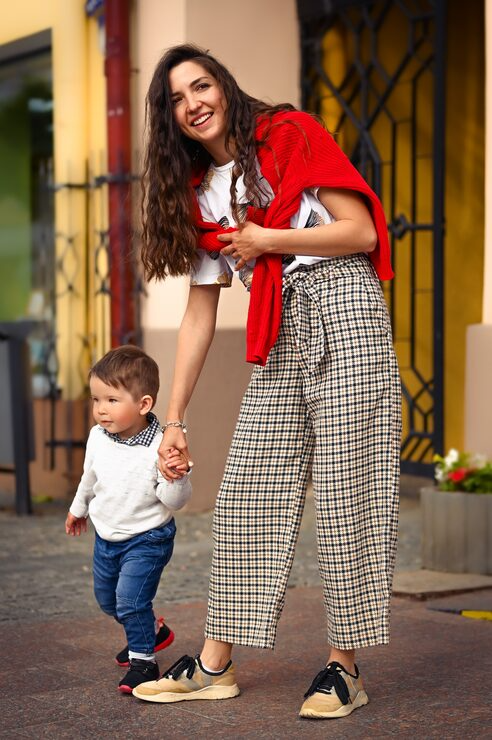
The best mama and me matching outfits don’t look like uniforms. They look like two people who clearly belong together — sharing a colour, a print, or a silhouette — without being identical in a way that feels forced. A mother in a floral wrap dress paired with her daughter in a floral pinafore works because both pieces are independently wearable. Neither looks incomplete without the other.
Brands that understand this distinction design sets where each piece has standalone value. That’s a much harder design brief than simply making the same garment in two sizes — and it shows in the quality of the finished product. Collections built around thoughtful women’s and children’s coordination consistently get this right by treating each wearer as an individual first.
How to Style Matching Outfits Without Overdoing It
Stick to One Point of Match
If the print matches, let everything else diverge a little. Different shoes, different accessories, hair styled differently. The coordination should feel like a subtle nod, not a full statement. This is especially true for older children, who often start to resist too-matchy styling around age seven or eight — and fair enough.
Choose Neutral Anchor Pieces
Prints and colours are where matching sets do their work, but the rest of the outfit should be grounded in neutrals. Cream, white, tan, and olive are endlessly versatile and photograph beautifully without competing with the focal piece. They also make it easier to repeat the outfit in different settings without it feeling like you’re recycling the same look.
Consider the Occasion
Matching outfits don’t need to be reserved for special occasions — in fact, they’re often more charming when they’re not. But it’s worth thinking about fit and formality. A linen set works beautifully for a casual family lunch or a trip to the market. A more structured coordinated look suits a birthday gathering or a family portrait session. The mistake most people make is going too formal too often, which makes the outfits feel like costumes rather than clothes.
The Emotional Dimension Nobody Talks About
There’s a version of this conversation that’s purely aesthetic — fabric choices, colour theory, styling tips. But that misses something. Mothers who dress in coordinated outfits with their children often describe it as a small, tangible expression of love. It says: we belong to each other. We chose this together. And for children who are still figuring out their place in the world, that kind of deliberate inclusion matters more than it might seem.
Years from now, the photographs of these moments will carry weight that has nothing to do with fashion at all.
Conclusion
Mama and me matching outfits have earned their place in the modern family wardrobe — not because they’re trendy, but because they do something genuinely meaningful. Done well, they’re an expression of connection, a small ritual of togetherness, and a reminder that style and sentiment aren’t mutually exclusive. The key is choosing pieces that respect both wearers — quality fabrics, thoughtful coordination, and designs that work as well on an ordinary Wednesday as they do for a special occasion.